MT5 White Label for Brokers
Build a branded MT5 trading environment with the infrastructure required to launch and scale a brokerage.
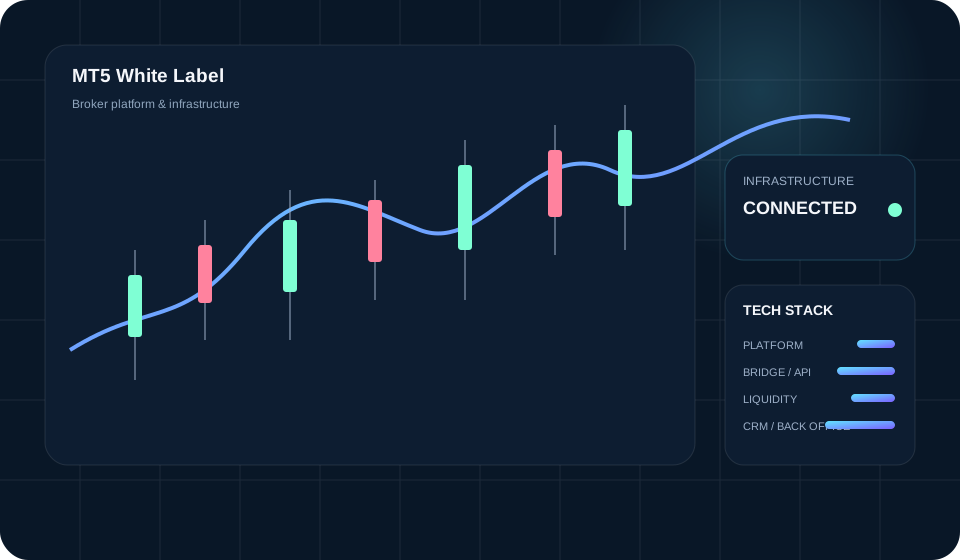
MT5 White Label: the trading layer of your brokerage
A MetaTrader 5 White Label project combines a branded trading environment with the configuration and connections required by your brokerage. The trading platform, client portal, liquidity relationship and operating processes have different responsibilities. A workable deployment defines those boundaries before implementation starts.
Tools for Brokers helps you discuss the platform configuration, execution connectivity, CRM integrations and infrastructure scope together. The commercial proposal should identify the contracting provider, the available licensing model, the services included and any third-party dependencies. Availability and rights are subject to the applicable agreements.
Define the configuration before deployment
Start with the account types, currencies, target instruments and trading conditions. Account groups, symbol settings, contract sizes, trading sessions, leverage, commissions, swaps and markups must be consistent with the brokerage model. Branding is one part of the configuration; it does not replace operational testing.
- Client environment: company branding, terminal access and the agreed client-facing experience.
- Accounts and instruments: groups, symbols, currency settings and trading conditions.
- Execution: the selected gateway or bridge, liquidity connectivity and routing requirements.
- Client operations: CRM, trader’s room, account creation and payment workflow boundaries.
- Infrastructure: hosting responsibilities, monitoring, backups and support escalation.
Connect the surrounding systems
A broker CRM integration needs a clear account mapping and permission model. Agree how accounts are created, how balances are reconciled and which system owns each client status. Payment and KYC systems introduce separate supplier agreements and processes; a platform connection does not automatically provide those services.
The execution design depends on the platform environment and selected counterparties. Compare bridge and gateway approaches against your liquidity requirements. Compatibility, instrument mapping and failure handling should be validated together, rather than inferred from a list of supported protocols.
A staged implementation with clear handover
- Discovery: document target markets, current systems, instrument list and decision owners.
- Scope: identify configuration work, supplier dependencies, access requirements and commercial responsibilities.
- Configuration: prepare account groups, symbols, branding and agreed connectivity.
- Integration testing: check account flows, pricing, orders, reports and recovery scenarios.
- Acceptance: compare the implemented behaviour with the agreed checklist and resolve outstanding issues.
- Handover: record support contacts, monitoring ownership, change procedures and access controls.
The launch schedule depends on supplier access, integration complexity, branding and the brokerage’s readiness. A timeline becomes useful when it names prerequisites and acceptance gates. Discuss your target date and dependencies in the first conversation.
What to include in an acceptance checklist
Test demo and live account paths, symbol settings, commissions, swaps, margin calculations, execution connectivity and CRM reconciliation. Include disconnected services, rejected requests, restricted permissions and restore procedures. Define who approves each test and what evidence is retained for handover.
If you already operate MT4, review the MT4 to MT5 migration plan before changing client accounts or integrations. A new MT5 environment and a migration of an existing book require different checks.
Use the MT5 White Label launch checklist for a workstream-by-workstream review and downloadable project brief.
Build a quote around your requirements
Separate setup work from recurring infrastructure charges and external supplier costs. Read the MT5 White Label cost breakdown and send your platform preference, instrument list, CRM requirements, expected scale and target timing. You can also use the provider evaluation checklist to compare proposals on equal terms.
Platform functionality and licensing conditions are different questions. Your proposal and supplier agreements determine the scope available to your project.
Questions before you start
What is included in an MT5 project?
The agreed scope can cover platform configuration, branding, execution connectivity, CRM integration and infrastructure support. The proposal identifies included components and separate supplier dependencies.
How is the launch timeline determined?
Timing depends on supplier access, branding, configuration, integration complexity and project readiness. Share your target date so prerequisites and acceptance gates can be discussed.
Can hosting be part of the scope?
Hosting, monitoring and backup responsibilities can be discussed as part of the infrastructure plan. The proposal must specify the resources, operational owner and support arrangements.
Is a White Label a brokerage licence?
No. A technology deployment does not authorise regulated brokerage activity. Applicable permissions and obligations depend on the business and jurisdiction.
Discuss your brokerage setup
Send your target markets, preferred platform, expected launch model and required integrations.
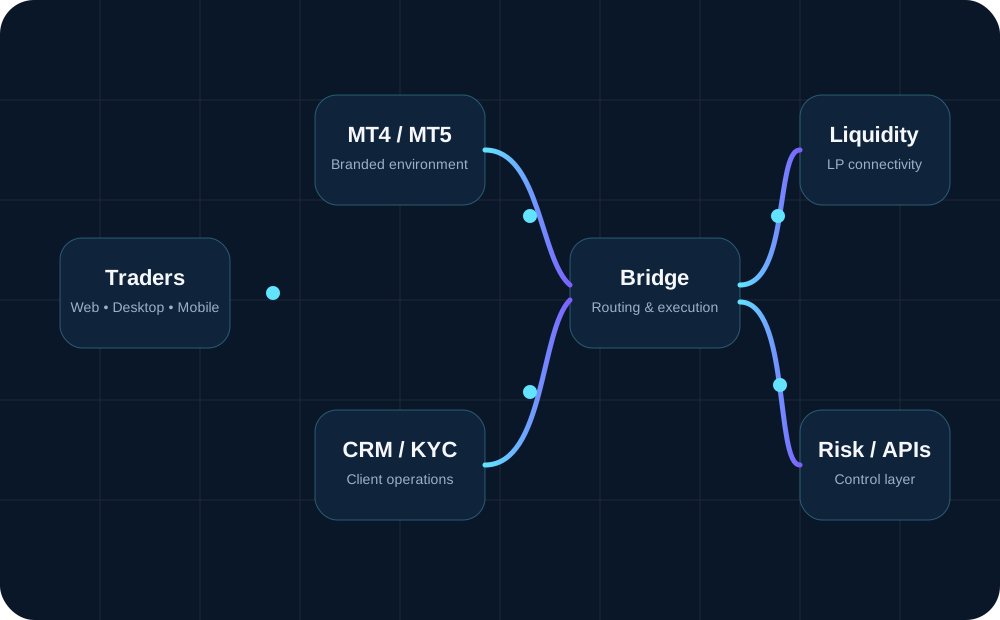
MT5 is only one layer of the brokerage
A production brokerage typically connects the trading environment to CRM, bridge/gateway, liquidity, risk controls and proprietary APIs.
Continue with the next decision
MT5 White Label Provider for Brokers
Explore requirements, dependencies and the next project steps.
MT5 White Label Cost
Explore requirements, dependencies and the next project steps.
Forex Broker CRM & MT5 Integration
Explore requirements, dependencies and the next project steps.
MT5 Bridge for Brokers
Explore requirements, dependencies and the next project steps.
MT4 to MT5 Migration for Brokers
Explore requirements, dependencies and the next project steps.